Attic Insulation
Attic Insulation: What It Costs and How to Choose the Right Approach
Two legitimate approaches, one decision that depends mostly on your ductwork and climate. Here's how to think about it before you talk to a contractor — and how we connect you with one who does this work.
What it is
Two different ways to insulate the same attic
“Attic insulation” covers two structurally different approaches, and a contractor should be able to explain which one fits your home rather than defaulting to whichever they install most often. The first is the traditional attic-floor approach: insulation goes across the floor of the attic, the roof deck and rafters stay outside the conditioned envelope, and the attic remains vented to the outside air the way attics have been built for decades. Spray foam applied at the floor plane, often combined with air-sealing at penetrations, brings this assembly to a higher performance level than loose-fill or batt alone.
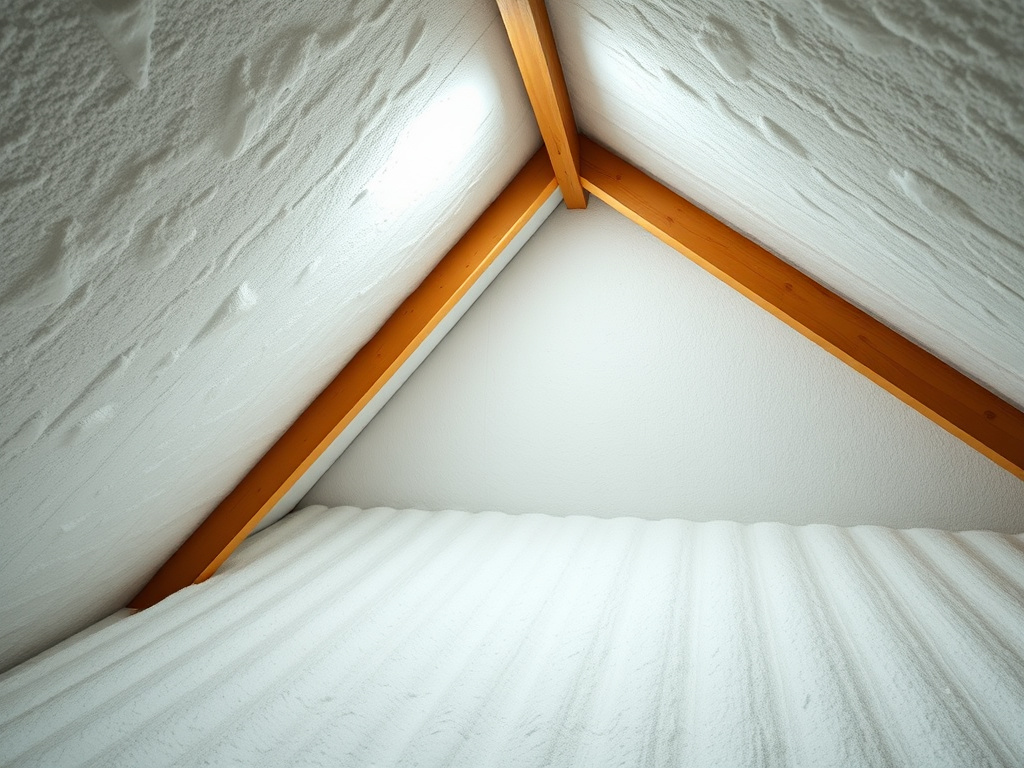
The second is the sealed (unvented) roof-deck approach: foam is applied directly to the underside of the roof deck instead of the attic floor, which effectively moves the attic inside the home's conditioned envelope. The attic stops being a vented, outdoor-temperature space and starts behaving thermally more like the rest of the house.
Neither approach is universally correct. A vented attic-floor assembly is a proven, lower-cost approach that works well when the attic is unused storage space with no ductwork or equipment in it and the existing ventilation is functioning properly. A sealed roof-deck assembly costs more per square foot of attic area but solves a specific problem: ductwork, air handlers, or mechanical equipment sitting inside an unconditioned attic, baking in summer heat or freezing in winter cold.
This is a genuinely climate- and home-specific decision, not a one-size answer, which is exactly why an in-person or photo-based assessment from a licensed contractor matters more here than on some other insulation projects. For background on the two foam types used in either approach, see our guides to open-cell spray foam and closed-cell spray foam.
When it's the right choice
Who typically needs which approach
The single biggest signal is where your HVAC ductwork and equipment actually live. If ducts, an air handler, or a furnace sit inside the attic, a sealed roof-deck approach is frequently the stronger long-term fit, because it brings that equipment into conditioned space instead of leaving it to lose or gain heat through duct walls in an attic that swings between freezing and well over 120°F. If the attic is empty storage space with no mechanical equipment, a traditional attic-floor approach with a high R-value target is often the more cost-effective route to the same comfort and energy goals.
Homeowners in the middle of a re-roof or planning one soon are also natural candidates for a sealed roof-deck conversion, since the roof deck is already exposed or about to be. Homes with a history of ice-dam damage, uneven room-to-room temperatures, or unusually high heating and cooling bills relative to comparable homes nearby are common reasons homeowners start looking into attic insulation in the first place, regardless of which approach ends up being the right fit.
Cost and region
What attic insulation costs, nationally
Attic-specific spray foam work generally falls within the broader national installed range of roughly $1.50 to $5.00 per square foot, with open-cell foam running toward the lower end (about $1.50–$3.50/sq ft) and closed-cell running higher (about $3.00–$5.00/sq ft) — closed-cell is more common on roof-deck applications because of its added moisture resistance and rigidity. These are directional national figures pulled from industry cost aggregators, not a quote for your specific attic.
Several variables move a real quote up or down from that range: which approach (roof-deck vs. floor), foam type, the thickness needed to hit your climate zone's R-value target, whether old insulation has to be removed first, and regional labor and access costs. Expect the higher end of the range in the Northeast and in coastal markets with tighter access or higher material-delivery costs, and the lower end in competitive Sun Belt metro markets. See how we organize contractors by region for more on how climate zone shapes both the approach and the price.
Climate and region
R-value guidance by climate zone
Attic R-value targets are set by climate zone under model energy codes, and they vary meaningfully from one part of the country to another. The ranges below are general code-guidance figures, organized by the five broad regions we use for navigation — not a precise county-by-county lookup and not something this platform asserts on its own authority.
| Southeast / Humid & Southwest / Hot-Dry | Roughly R-38–R-49 attic code guidance in milder IECC zones. Vapor control and attic heat gain tend to matter as much as the raw R-value number. |
|---|---|
| Midwest | Roughly R-49 is a common code-guidance target in mixed-humid to cold zones, reflecting a genuine four-season swing between humid summers and sub-zero winters. |
| Northeast / Cold | Code guidance commonly runs R-49–R-60 in the coldest zones, where heating-degree-days and ice-dam prevention drive the higher target. |
| Pacific / Marine | Milder heating and cooling swings mean the R-value target is less extreme; moisture management and older-housing-stock retrofits are frequently the bigger story here. |
Directional code-guidance ranges only. Exact R-value requirements vary by state and local code jurisdiction — confirm the specific target for your address with your matched contractor.
Before you hire
What to ask a contractor before hiring
A proper attic assessment should walk through your home's specific ductwork, existing insulation condition, and climate zone before recommending an approach. Here's what that process typically looks like, so you know what to expect and what to ask about.
Ducts and equipment get located first
A contractor should confirm whether HVAC ductwork and equipment sit inside the attic before recommending an approach — this single factor drives most of the roof-deck-vs-floor decision.
Existing insulation gets assessed
Old batt, blown-in, or degraded insulation is inspected for moisture damage, pest contamination, or pre-1990 vermiculite before anything new goes in.
Air-sealing happens before or alongside the foam
Top-plate penetrations, can-light housings, and chase openings are sealed so the new insulation isn't undermined by air leakage around it.
Foam is applied to the chosen assembly
Roof deck for a sealed/conditioned attic, or attic floor for a traditional vented approach — matched to the climate zone, ductwork location, and existing roof assembly.
Common mistakes
Red flags when hiring for attic insulation
- ✓Hiring based on a single square-foot price without confirming foam type, thickness (board feet), and whether old insulation removal is included in the number
- ✓Choosing a sealed roof-deck approach without checking whether the existing roofing material and ventilation design are compatible with an unvented assembly
- ✓Skipping air-sealing and going straight to foam, which leaves the single biggest source of attic heat loss and gain unaddressed
- ✓Assuming a lower R-value target from a mild-climate neighbor's job applies to your own zone, county, or code jurisdiction
- ✓Not asking whether existing insulation will be inspected for contamination or moisture damage before new foam is applied over or near it
FAQ
Attic insulation questions homeowners ask most
Should my attic be a sealed roof deck or a traditional attic floor?
+
Both are legitimate approaches depending on your home. A sealed (unvented) roof deck is often the right call when ductwork or HVAC equipment sits in the attic, since it brings that space inside the conditioned envelope. A traditional attic-floor approach can be the better fit when the attic is unused storage space with no ducts and the existing roof ventilation is working well. A contractor who's inspected your specific attic can tell you which fits your home.
What R-value do I actually need for my attic?
+
It depends on your climate zone. Code guidance runs roughly R-38–49 in milder zones up to R-49–60 in the coldest zones, but exact requirements vary by state and local code jurisdiction. Your matched contractor can confirm the specific target that applies to your address.
What does attic insulation cost nationally?
+
Spray foam attic work generally falls within the broader national range of roughly $1.50–$5.00 per square foot installed, with open-cell toward the lower end and closed-cell toward the higher end. Your actual price depends on foam type, thickness, roof-deck vs. floor assembly, and whether old insulation needs to come out first — comparing a couple of matched quotes is the fastest way to see what's realistic for your project.
Why does everyone say ducts in the attic matter so much?
+
Ductwork sitting in a hot or freezing unconditioned attic loses or gains heat through the duct walls before that air ever reaches a living space — often the single biggest driver of wasted energy in a home. Sealing the roof deck brings the attic (and the ducts inside it) into the conditioned envelope, which is why homes with attic ductwork are the cases where a sealed approach tends to pay off the most. A contractor who inspects your attic can size that benefit for your specific ductwork.
Can spray foam go over my existing attic insulation?
+
Sometimes, but not automatically. Old insulation should be checked first for moisture damage, pest contamination, or (in pre-1990 homes) vermiculite before anything new is applied. If the existing material is compromised, removal generally needs to happen before a new foam install — otherwise the new insulation gets applied over a problem instead of solving it.
Get matched with contractors who do attic insulation
Tell us about your attic — roof-deck or floor, ductwork location, rough square footage — and we'll connect you with licensed contractors who do this work in your area. Free, no obligation.
Related reading
Go deeper before you get matched
Energy Audits
How a blower-door and thermal-imaging audit sizes an attic insulation job to your home's actual heat loss instead of a guess.
Insulation Removal
What it costs and how a proper removal process works when old attic insulation needs to come out before a new install.
Spray Foam Cost by Region
The full 2026 climate-zone cost breakdown, including project-type ranges for attic and roof-deck work.