Insulation Removal
Insulation Removal: When You Need It and What It Costs
Contaminated, damaged, or decades-old insulation should come out before anything new goes in. Here's how to tell if you need it, what a proper removal process looks like, and how to get matched with a contractor who does it right.
What it is
Removal is a distinct job from installation, not a step you can skip
Insulation removal is exactly what it sounds like: taking old insulation material — loose-fill, batt, blown-in cellulose or fiberglass, or in some older homes, vermiculite — out of an attic or wall cavity before new insulation goes in. It's easy to treat this as a quick prep step ahead of the “real” job, but for a meaningful share of homes it's the part of the project that actually determines whether the new insulation performs the way it's supposed to.
New insulation, including spray foam, installed over contaminated, wet, or degraded material doesn't fix the underlying problem — it covers it up. Pest waste, trapped moisture, and compressed old fiberglass or cellulose all keep doing whatever damage they were already doing, just now hidden under a new layer.
That's why a contractor's removal process matters as much as their installation process, and why it's worth understanding what a proper job looks like before you hire someone. The section below walks through the reasons homeowners typically need removal, what the process should include, and the questions worth asking before removal work starts. For the install side of the project, see our guides to attic insulation and open-cell spray foam.
When it's the right choice
Common reasons homeowners need insulation removed
Removal isn't needed for every insulation project — plenty of homes go straight to a new install. These are the situations where it typically is.
| Rodent or pest contamination | Droppings, urine, nesting material, and odor trapped in loose-fill or batt insulation are a common reason removal comes before any new install — new insulation applied over contaminated material doesn't solve the underlying problem. |
|---|---|
| Water or smoke damage | Insulation that's been soaked, compressed, or exposed to smoke loses much of its insulating value and can hold moisture against framing, which is a mold and structural concern beyond just insulation performance. |
| Pre-renovation or pre-foam prep | Remodels, additions, and attic conversions frequently require clearing existing insulation to access framing, wiring, or ductwork, or simply to make room for a different insulation system like spray foam. |
| Pre-1990 vermiculite | Older homes may have vermiculite loose-fill insulation, some of which was sourced from a mine with asbestos contamination. Homes built or insulated before 1990 with unidentified loose pebble-like attic insulation should be screened before any disturbance, removal, or new insulation work. |
| General age and settling | Blown-in and batt insulation compress, settle, and lose R-value over decades even without an obvious contamination event, which is a slower but still valid reason to remove and replace rather than insulate over it. |
Cost and region
What insulation removal costs, nationally
Removal is generally priced separately from installation, and contractors typically quote it either per square foot of attic or wall area or as a flat project fee, driven mainly by the size of the space, the type of material coming out, and whether special handling — like suspected vermiculite screening or contamination containment — is involved. A removal-plus-reinstall package (old insulation out, new spray foam in) is priced as a combined project and generally costs less than paying for each phase separately with two different contractors, since containment, disposal, and scheduling only happen once.
As with installation, expect removal costs to run higher in markets with higher labor costs and disposal fees — generally the Northeast and dense metro markets — and lower in competitive Sun Belt and rural markets, though rural jobs can carry a trip or minimum-crew charge. Because removal pricing depends heavily on what's actually in your attic or walls, an accurate number requires a contractor to see (or review photos of) the material first rather than quoting blind. See our regional contractor guide for more on how location affects pricing.
The proper process
What a proper removal process looks like
Use this as a checklist for evaluating any contractor's removal process — a job done right should include all four steps, in roughly this order.
Containment
The work area is sealed off from the rest of the home with plastic sheeting and negative-air containment so contaminated material and dust don't spread into living spaces during removal.
HEPA extraction
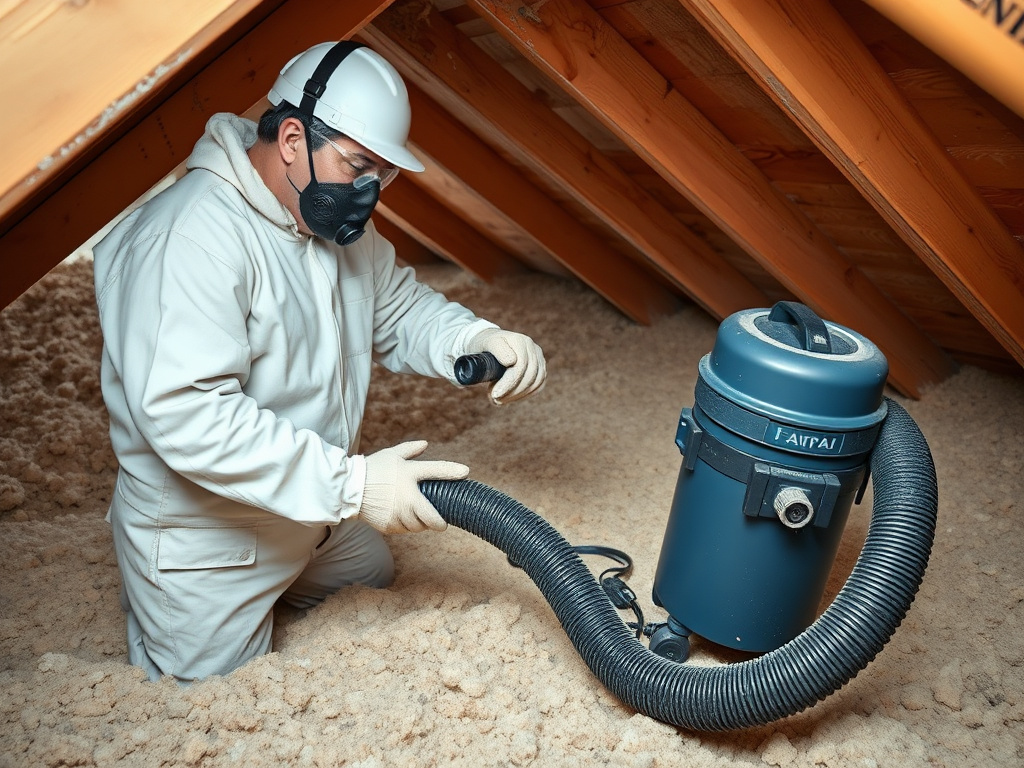
Old insulation is removed using HEPA-filtered vacuum equipment rather than shoveled loose, which controls airborne particles, dust, and contaminants during the pull instead of after the fact.
Proper disposal
Removed material is bagged and hauled to disposal in compliance with local waste rules — contaminated or asbestos-suspect material may require special handling and a licensed disposal path.
Sanitizing
The now-empty attic or wall cavity is treated for odor, residue, and (where relevant) pest deterrent before any new insulation goes in, so the new material isn't installed over an unresolved problem.
Health and safety
Why DIY removal is riskier than it looks
Pulling old insulation out of an attic looks like straightforward manual labor, which is exactly why it tempts homeowners into doing it themselves. In practice, whole-attic or whole-wall removal without proper containment and a HEPA-filtered vacuum can send dust, fiberglass particles, and — if the material is contaminated — pest waste or mold spores straight into the rest of the home's air rather than out of it.
The bigger risk is with older homes and unidentified material. Pebble-like loose-fill insulation in a home built or insulated before 1990 may be vermiculite, and some vermiculite was sourced from a mine later found to be contaminated with asbestos. Disturbing that material without professional screening first — including a well-meaning DIY removal attempt — is exactly the scenario that turns a routine insulation project into a real health concern. If you're not certain what's in your attic and your home predates 1990, that's a screen-first situation, not a DIY-first one.
Common mistakes
Red flags when hiring for removal
- ✓A contractor who offers to install new insulation directly over old contaminated material without addressing it first
- ✓No mention of HEPA extraction or containment — a shop-vac and open bags is not an acceptable process for contaminated insulation
- ✓No plan for compliant disposal, especially for anything that might be pre-1990 vermiculite
- ✓Pressure to skip vermiculite screening in an older home because it 'probably isn't asbestos'
- ✓A single flat price with no distinction between removal-only and removal-plus-reinstall scope
FAQ
Insulation removal questions homeowners ask most
How do I know if I actually need insulation removed, or can new insulation just go on top?
+
It depends on the condition of what's already there. Clean, dry, unsettled insulation can sometimes be topped off rather than removed. But contaminated (pest, water, smoke), suspected pre-1990 vermiculite, or badly compressed insulation generally needs to come out first — a contractor should assess the existing material before recommending either path.
What does insulation removal cost?
+
Removal-only work and removal-plus-reinstall packages are priced differently, and national figures vary by square footage, material type, and whether special handling (like vermiculite screening) is involved. As a directional starting point, removal is typically a smaller line item than a full reinstall, but any contractor quoting your project should break the two out separately so you can see what you're actually paying for.
Is it safe to remove old insulation myself?
+
Not for whole-attic jobs, and especially not for anything that might be contaminated. DIY removal without containment or a HEPA-rated respirator can spread dust, pest waste, or fiberglass particles into the rest of the home, and pre-1990 vermiculite should never be disturbed without professional screening first given the asbestos risk in some source material. This is one of the clearest cases where hiring a licensed professional is worth it over a DIY attempt.
What is vermiculite insulation and why does it matter?
+
Vermiculite is a lightweight, pebble-like loose-fill insulation used in many homes before 1990. Some (not all) vermiculite insulation was sourced from a mine later found to be contaminated with asbestos. Homeowners with unidentified pebble-like attic insulation in an older home should have it screened by a qualified professional before any removal, renovation, or new insulation work disturbs it.
Does removal always have to happen before a new spray foam install?
+
Not always — it depends on the condition of what's currently in the attic or wall cavity. But contaminated, water-damaged, or badly degraded insulation generally does need to come out first, since spray foam applied over a compromised substrate doesn't solve the underlying problem it's covering up.
Get matched with contractors who handle removal
Tell us what's in your attic or walls and why it needs to come out, and we'll connect you with licensed contractors who handle removal and reinstall. Free, no obligation.
Related reading
Go deeper before you get matched
Attic Insulation
Sealed roof-deck vs. attic-floor approaches, R-value targets by climate zone, and national cost ranges for the reinstall side of the project.
Open-Cell Spray Foam
What half-pound open-cell foam is, what it costs, and where it's the right fit once old insulation is out.
Spray Foam Cost by Region
The full 2026 climate-zone cost breakdown, including how removal affects a combined project quote.