Service guide
Closed-Cell Spray Foam Insulation: A Buyer's Guide
Closed-cell foam is the denser, higher-performance half of the spray foam family — roughly double the R-value per inch of open-cell foam, rigid enough to add real structural strength, and dense enough to function as a vapor retarder. Here's what it is, what it costs nationally, and where the extra cost is genuinely worth paying.
What it is
A dense, rigid foam built to resist water and add strength
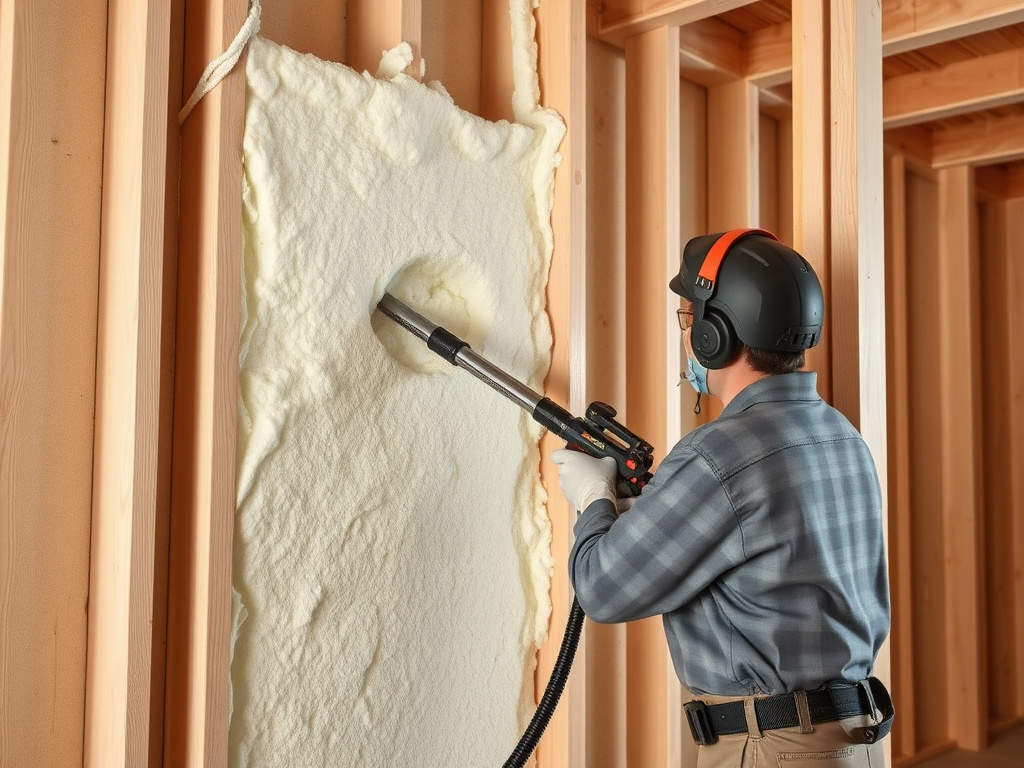
Closed-cell spray foam is a two-component polyurethane insulation, applied wet with plural-component equipment much like open-cell foam, but formulated to expand far less — roughly 30 to 40 times its liquid volume rather than open-cell's roughly 100 times. That lower expansion ratio is what produces a denser, more rigid cured foam: the individual cells are small, closed, and packed with a low-conductivity blowing agent rather than ambient air.
That closed-cell structure gives the material its name and its properties. Because the cells are sealed rather than interconnected, the cured foam is largely water-resistant rather than absorbent, and it cures to roughly 2 pounds per cubic foot — about four times the density of open-cell foam, which is the main driver of its higher material cost.
Thermally, closed-cell foam performs at roughly R-5 to R-7 per inch, meaningfully higher than open-cell's R-3.5 to R-3.7 per inch. That means a thinner application of closed-cell foam can hit the same R-value target as a much thicker layer of open-cell — a real advantage in shallow cavities like a rafter bay or a metal building's structural framing, where there isn't room to spare.
Two other properties set it apart from open-cell foam. At sufficient thickness — commonly cited around 1.5 inches or more, depending on the product and jurisdiction — it functions as a Class II vapor retarder, managing moisture drive through the assembly rather than just insulating it. And because it bonds rigidly to framing and sheathing once cured, it adds real racking (lateral) strength to a wall assembly, a structural benefit open-cell foam doesn't provide.
When it's the right choice
Roof decks, metal buildings, and moisture-exposed assemblies
Closed-cell foam is the more common recommendation anywhere an assembly has to manage moisture and structure at the same time, not just temperature. Unvented roof-deck assemblies are the clearest example — closed-cell foam sprayed directly to the underside of roof sheathing controls both heat gain and moisture drive in a single material, which is why it's the standard pick for conditioned attics and cathedral ceilings in humid and hurricane-prone regions.
Metal buildings are another strong fit: closed-cell foam bonds directly to metal purlins and panels, controls condensation on the underside of a metal roof (a common failure point for less-rigid insulation types), and adds a measure of structural rigidity to the whole assembly. Exterior walls, below-grade foundation walls, and flood- or moisture-prone construction generally call for closed-cell for the same water-resistance reasons.
Coastal and hurricane-exposed construction frequently specifies closed-cell foam for roof-deck bonding strength as much as for its thermal or moisture performance — the rigid bond between foam, sheathing, and framing can meaningfully improve a roof assembly's wind-uplift resistance. For interior walls in a mild climate, closed-cell foam is usually more performance than the application needs — see open-cell spray foam for the more commonly recommended option there.
What it costs
Typical national cost range, and why it costs more
Industry cost aggregators put installed closed-cell spray foam at roughly $3.00 to $5.00 per square foot nationally — meaningfully more than open-cell foam's roughly $1.50 to $3.50 per square foot range — which translates to roughly $1.00 to $1.80 per board foot in trade pricing. These are directional national ranges from industry cost aggregators, not a quote for any specific home; your actual price depends on foam thickness, project type, access, and regional labor and material-delivery costs.
The cost gap comes down to material, not markup. Closed-cell foam's roughly 2-lb density means a contractor is putting down about four times as much material per cubic foot of cavity filled compared to open-cell foam, using a different (and typically more expensive) blowing-agent chemistry. Because it also delivers roughly double the R-value per inch, a job often needs less thickness to hit the same R-value target — which partially, but not fully, offsets the higher per-board-foot price.
The extra cost is genuinely worth paying on roof decks, metal buildings, and moisture-exposed assemblies, where closed-cell's water resistance and structural contribution solve problems open-cell foam can't. It's usually not worth paying on an ordinary interior wall in a mild climate, where open-cell foam performs the job at a lower price.
| Density | Roughly 2 lb per cubic foot once fully expanded — the reason it's commonly called "2-lb foam" on a bid sheet. |
|---|---|
| R-value per inch | Approximately R-5 to R-7, roughly double open-cell foam's per-inch value, so less thickness is needed to hit the same target. |
| Vapor permeability | Functions as a vapor retarder at sufficient thickness (commonly cited around 1.5 inches or more, depending on the product and code jurisdiction). |
| Structural contribution | Adds meaningful racking strength to a framed wall assembly once cured — a property open-cell foam doesn't share. |
| Typical installed cost | Roughly $3.00-$5.00 per square foot nationally; roughly $1.00-$1.80 per board foot in trade pricing. |
| Best-fit locations | Roof decks, metal buildings, humid-climate assemblies, exterior and below-grade applications, coastal construction. |
Directional national figures from industry cost aggregators, not a quote. Board-foot pricing reflects actual thickness sprayed, not just square footage covered.
Regional cost swings are real — coastal material-delivery logistics and Northeast labor costs both tend to push closed-cell pricing toward the higher end of the national range. See find contractors by region for how climate zone and local market conditions affect a specific quote.
Climate & region considerations
Where closed-cell foam earns its price tag
In Southeast and Humid regions, moisture and vapor-drive control matter as much as R-value, which is exactly where closed-cell foam's combination of vapor retarding and water resistance pays off — roof-deck bonding for hurricane resistance is a common regional application on top of the thermal case.
In Northeast and Cold-climate regions, closed-cell foam is frequently specified on roof decks and rim joists where hitting a high R-value target in limited cavity depth matters, and where ice-dam prevention benefits from a fully sealed, high-performance assembly.
Pacific and Marine climates are mild but persistently damp, which makes closed-cell foam a common choice for older housing-stock retrofits where moisture management is the deciding factor, even though the temperature swings don't demand it the way a cold climate would.
Southwest and Hot-Dry and Midwest regions use closed-cell foam more selectively — often on metal buildings, below-grade foundations, or specific roof-deck assemblies — rather than as the default choice across every application, since vapor control is a smaller concern in drier climates.
This is a loose, directional grouping meant for buyer education, not a precise zone-by-county map — exact code-required R-values and vapor-retarder thickness rules vary by state and jurisdiction, and a contractor matched to your ZIP code will confirm what actually applies to your project.
Before you hire
What to ask a contractor before hiring for closed-cell foam
Closed-cell foam's higher price makes a clear, specific quote even more important. These are the questions worth asking before signing:
- ✓Are you actively licensed for insulation or spray foam work in this state, if the state requires it?
- ✓What thickness (in inches, and the resulting board-foot count) are you quoting, and does that thickness meet the vapor-retarder threshold for this assembly?
- ✓Is this quote specifying closed-cell foam by name and density, or is "spray foam" being used loosely to mean either type?
- ✓For a roof deck or metal building: what's your experience with this specific assembly type, and what wind-uplift or condensation performance should I expect?
- ✓What's the expected timeline from application to full cure, and are there any ventilation or occupancy restrictions during that window?
- ✓Is thermal barrier or ignition barrier coating included where code requires it over exposed foam, or billed separately?
- ✓Can you explain, specifically, why closed-cell (rather than the less expensive open-cell) is the right call for this part of my project?
Common mistakes
Red flags when hiring for closed-cell spray foam
The most expensive mistake on a closed-cell job is paying closed-cell prices for foam that was never actually closed-cell, or for a thickness that doesn't meet the vapor-retarder threshold the assembly needed in the first place. A quote that doesn't specify foam density and thickness in writing makes both of these nearly impossible to verify after the fact.
A second common issue is a contractor defaulting to closed-cell foam everywhere, including on interior walls in mild climates where it adds real cost without a matching benefit. A contractor who can explain specifically why closed-cell is needed for a given assembly — not just that it's the "better" foam — is the one worth hiring, especially since the price gap between the two foam types is substantial.
Finally, on roof decks and metal buildings specifically, watch for a contractor who can't speak to thermal or ignition barrier requirements over exposed foam, or who treats a code-required barrier coating as optional. Those requirements are close to universal in U.S. model building codes, and skipping them is a red flag regardless of how good the foam application itself looks.
FAQ
Closed-cell spray foam: common questions
Why does closed-cell spray foam cost so much more than open-cell?
+
It uses roughly four times the material density of open-cell foam per cubic foot, a different (typically higher-cost) blowing agent chemistry, and delivers roughly double the R-value per inch along with structural and moisture-resistance properties open-cell doesn't have. All of that shows up in the per-board-foot price.
Does closed-cell foam really add structural strength?
+
Yes — once cured, closed-cell foam bonds rigidly to framing and sheathing, which measurably increases a wall assembly's racking (lateral/shear) strength. It's one of the reasons it's specified on metal buildings and in high-wind or seismic construction, beyond its thermal performance.
Is closed-cell foam necessary for every roof deck?
+
Not universally, but it's the far more common recommendation for unvented roof-deck assemblies, especially in humid or extreme climates, because it manages both thermal performance and moisture control in a single material. A contractor will confirm what your local code and climate zone actually require.
How thick does closed-cell foam need to be to act as a vapor retarder?
+
Roughly 1.5 inches is a commonly cited threshold for many closed-cell products to function as a Class II vapor retarder, but the exact figure depends on the specific foam product and the code jurisdiction. Your matched contractor can confirm the number that applies to your project.
Is closed-cell foam worth the extra cost over open-cell?
+
It depends entirely on the application. On an interior wall in a mild climate, the extra cost often isn't justified. On a roof deck, a metal building, a below-grade wall, or a coastal or humid-climate assembly, the added moisture resistance and structural contribution are frequently worth paying for — a contractor can walk through the specific tradeoff for your project.
Get matched with contractors who install closed-cell foam
Tell us about your project and we'll connect you with licensed spray foam contractors near you who work with closed-cell foam — free, no obligation.
Related reading
Go deeper before you decide
Open-Cell Spray Foam
A lower-cost, vapor-permeable option that's the more common fit for interior walls and attics in most climates.
Attic Insulation
Sealed roof-deck vs. attic-floor approaches, and what R-value target applies to your climate zone.
Spray Foam Cost by Region
The full 2026 climate-zone buyer's guide to what spray foam costs nationally and why the number moves.