Service guide
Open-Cell Spray Foam Insulation: A Buyer's Guide
Open-cell foam is the lighter, less expensive half of the spray foam family — expansive enough to fill an entire wall cavity or attic in a single pass, and vapor-permeable in a way that suits most (but not all) climates. Here's what it is, what it costs nationally, and how to know whether it's the right call for your project before you talk to a contractor.
What it is
A soft, expansive foam built to fill cavities, not resist water
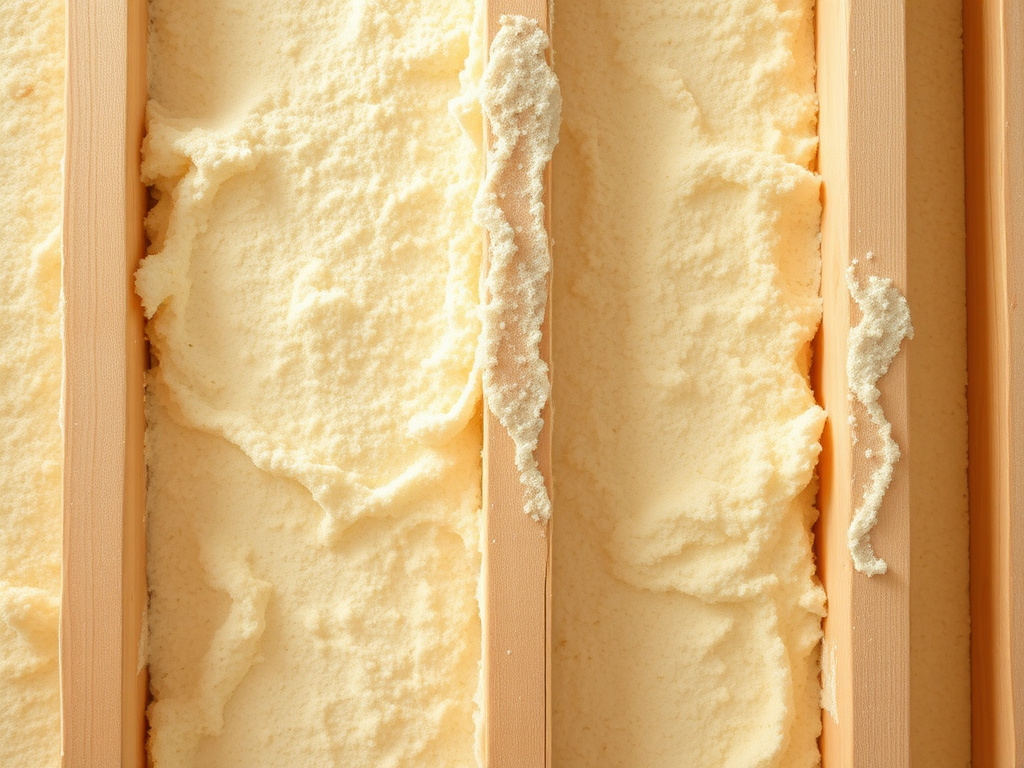
Open-cell spray foam is a two-component polyurethane insulation applied wet with a plural-component rig, where it expands roughly 100 times its liquid volume as it cures. The name comes from its cell structure: the tiny bubbles that make up the cured foam are ruptured and interconnected rather than sealed, which is what gives it a soft, spongy feel compared to closed-cell foam's rigid, dense finish.
That open structure is also why it's called half-pound foam on a bid sheet — it cures to roughly 0.5 pounds per cubic foot, a fraction of closed-cell foam's roughly 2 pounds per cubic foot. Less material per cubic foot of cavity filled is the main reason open-cell foam costs meaningfully less than closed-cell for the same square footage sprayed.
Thermally, open-cell foam performs at roughly R-3.5 to R-3.7 per inch of cured thickness — lower than closed-cell's R-5 to R-7 per inch, but still well ahead of traditional batt or blown-in insulation on an air-sealing basis, since spray foam seals gaps and penetrations that fibrous insulation simply drapes over.
The other defining property is vapor permeability. Open-cell foam doesn't function as a vapor barrier at any practical thickness — moisture vapor can pass through it. In a lot of assemblies that's a non-issue or even a benefit, since it lets a wall assembly dry in whichever direction it needs to. In a handful of specific assemblies — covered below — it's the reason a contractor will steer a homeowner toward closed-cell foam instead.
When it's the right choice
Interior cavities, attics, and sound control — in most climates
Open-cell foam does its best work filling large interior volumes efficiently: interior wall cavities, attic floors and rafter bays, and interior partition walls where the goal is as much sound dampening as thermal performance. Because it expands so aggressively, it fills irregular framing, wiring penetrations, and odd cavity shapes more completely than batt insulation can, without the material cost of closed-cell foam.
It's typically the default recommendation for interior walls in nearly every climate zone, and for attics in climates where a vapor retarder isn't a code requirement for that specific assembly. Sound dampening between floors, around home theaters, or along shared walls in multifamily construction is another common use case where open-cell's density and cell structure genuinely outperform fibrous insulation.
Where it's typically not the right call: roof decks in humid or extreme climates, exterior-exposed applications, below-grade or flood-prone assemblies, and any assembly where local code requires a Class II vapor retarder that open-cell foam alone can't provide. A licensed contractor evaluating your specific project will flag these cases — see closed-cell spray foam for the alternative in those situations.
What it costs
Typical national cost range and the board-foot math behind it
Industry cost aggregators put installed open-cell spray foam at roughly $1.50 to $3.50 per square foot nationally, which translates to roughly $0.40 to $1.00 per board foot in the trade pricing most contractors actually quote from. These are directional national ranges, not a quote for any specific home — your actual price depends on foam thickness, project type, access, and where you live. Costs tend to run toward the lower end of the range in competitive Sun Belt metro markets, and toward the higher end in the Northeast and in rural markets with fewer active contractors.
A board foot is one square foot of surface sprayed to one inch of thickness. It's the unit that actually matters, because a contractor quoting a thin one-inch coat and a contractor quoting a full-depth fill are describing very different jobs even if both call it "spray foam insulation" on the invoice. A 2x6 wall cavity, for example, is roughly 5.5 inches deep — filling it completely with open-cell foam is roughly 5.5 board feet of material per square foot of wall, not one.
| Density | Roughly 0.5 lb per cubic foot once fully expanded — the reason it's commonly called "half-pound foam" on a bid sheet. |
|---|---|
| R-value per inch | Approximately R-3.5 to R-3.7, lower per inch than closed-cell but achieved at a lower material cost per board foot. |
| Vapor permeability | Vapor-open (vapor-permeable) — it doesn't function as a vapor barrier, which is a benefit in some assemblies and a drawback in others. |
| Typical installed cost | Roughly $1.50-$3.50 per square foot nationally; roughly $0.40-$1.00 per board foot in trade pricing. |
| Best-fit locations | Interior wall cavities, attic floors or rafters, interior sound-dampening applications, most climate zones. |
Directional national figures from industry cost aggregators, not a quote. Comparing quotes in board feet, not just a lump price, is the fastest way to spot an outlier.
Regional cost swings are real but hard to pin down precisely from the outside — the honest way to see what open-cell foam runs in your specific area is to compare a few contractor quotes rather than rely on a single published number. See find contractors by region for how climate zone and local market conditions tend to move the price.
Climate & region considerations
Where open-cell foam is the default, and where it isn't
Because open-cell foam doesn't act as a vapor barrier, how well it fits your project shifts with your climate. In Northeast and Cold-climate regions, open-cell works well in interior walls and attic floors, but attic roof-deck assemblies in the coldest zones sometimes call for a vapor retarder detail that open-cell alone won't satisfy — a contractor working in that climate zone will know the local code target.
In Southeast and Humid regions, moisture and vapor-drive control matter enough that contractors more frequently favor closed-cell foam on roof decks and in coastal or hurricane-exposed assemblies, even though open-cell remains a common and appropriate choice for interior walls throughout the region.
In Southwest and Hot-Dry climates, vapor control is a much smaller concern than air-sealing against cooling load, which plays to open-cell foam's strengths — it's frequently the default attic and wall choice across this region.
Midwest homes deal with a genuine four-season swing, so the right answer often comes down to the specific assembly (roof deck vs. attic floor) more than the region as a whole. Pacific and Marine climates are mild but persistently damp, which is another case where moisture-prone assemblies may call for closed-cell detailing even though open-cell remains standard for interior work.
This is a loose, directional grouping meant for buyer education, not a precise zone-by-county map — exact code-required R-values and vapor-retarder rules vary by state and jurisdiction, and a contractor matched to your ZIP code will confirm what actually applies to your project.
Before you hire
What to ask a contractor before hiring for open-cell foam
A genuinely useful vetting conversation covers more than price. These are the questions that separate a comparable quote from a guess:
- ✓Are you actively licensed for insulation or spray foam work in this state, if the state requires it?
- ✓What thickness (in inches, and the resulting board-foot count) are you quoting, and what R-value does that thickness deliver?
- ✓Is this quote specifying open-cell foam by name, or is "spray foam" being used loosely to mean either type?
- ✓Does the quote include air sealing, or just the foam fill itself?
- ✓What's the expected timeline from the day work starts to full cure, and are there any occupancy restrictions during that window?
- ✓Is cleanup and disposal of packaging and overspray included, or billed separately?
- ✓Can you walk me through why open-cell (rather than closed-cell) is the right call for this specific part of my house?
Common mistakes
Red flags when hiring for open-cell spray foam
The most common mistake isn't picking the wrong foam type outright — it's accepting a quote that never specifies foam type or thickness at all. "Spray foam insulation" on an invoice with no board-foot number or R-value target is nearly impossible to compare against a competing quote, and it's a sign the contractor hasn't scoped the job in detail.
A second common issue is a contractor defaulting to open-cell everywhere because it's cheaper, including on roof decks or exterior-exposed assemblies where a vapor-permeable foam is a genuinely poor fit. A contractor who can explain, specifically, why open-cell is right for your project — not just that it's the lower bid — is the one worth hiring.
Finally, watch for high-pressure, same-day-signing discounts and a refusal to put foam type, thickness, and scope in writing. Getting two or three matched quotes side by side, each specifying the same detail level, is the most reliable way to catch either problem before work starts.
It's also worth watching for a quote that skips the prep work entirely — masking off electrical boxes, protecting finished surfaces near the spray area, and confirming adequate ventilation during application and cure. Open-cell foam's fast expansion makes overspray a real risk in a finished space, and a contractor who doesn't mention containment at all is often the same one who hasn't thought carefully about the rest of the job either. None of this means every low bid is a bad one — plenty of licensed contractors run efficient jobs at a fair price — but a quote that's silent on these details is worth a follow-up question before it's worth a signature.
FAQ
Open-cell spray foam: common questions
Is open-cell spray foam as good as closed-cell?
+
Neither is universally "better" — they're suited to different parts of a building. Open-cell costs less and fills large interior cavities efficiently; closed-cell costs more but adds rigidity, moisture resistance, and a higher R-value per inch, which matters more on roof decks, exterior assemblies, and in humid climates.
Can open-cell foam be used in an attic?
+
Yes, and it's one of its most common applications, whether the approach is a sealed roof deck or a traditional attic-floor fill. Whether open-cell is the right pick for a given attic depends on the climate zone and whether a code-required vapor retarder applies to that assembly — a contractor licensed in your area can confirm the local requirement.
Does open-cell spray foam absorb water?
+
Because it's vapor-permeable and has an open cell structure, it can absorb and hold moisture if it's exposed to a persistent leak or bulk water intrusion, unlike closed-cell foam's closed, largely water-resistant cell structure. That's the main reason contractors steer it away from exterior-exposed, below-grade, or flood-prone applications.
Why is open-cell foam priced per board foot instead of per square foot?
+
Because thickness varies by application, contractors typically quote in board feet — one square foot of surface sprayed one inch thick. A thin coat and a thick coat of the same foam cost very different amounts even over identical square footage, so board-foot pricing is what actually reflects the job.
Will a contractor ever talk me out of open-cell foam?
+
A reputable one will, when the assembly calls for it. Roof decks in humid or extreme climates, exterior-exposed surfaces, and moisture-prone assemblies are common cases where a contractor will recommend closed-cell instead, even if open-cell would have been the cheaper quote.
Get matched with contractors who install open-cell foam
Tell us about your project and we'll connect you with licensed spray foam contractors near you who work with open-cell foam — free, no obligation.
Related reading
Go deeper before you decide
Closed-Cell Spray Foam
Higher R-value per inch, added rigidity, and moisture resistance for roof decks, metal buildings, and humid-climate assemblies.
Attic Insulation
Sealed roof-deck vs. attic-floor approaches, and what R-value target applies to your climate zone.
Spray Foam Cost by Region
The full 2026 climate-zone buyer's guide to what spray foam costs nationally and why the number moves.